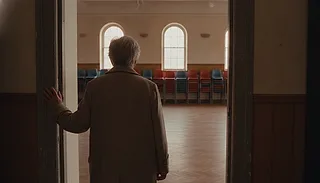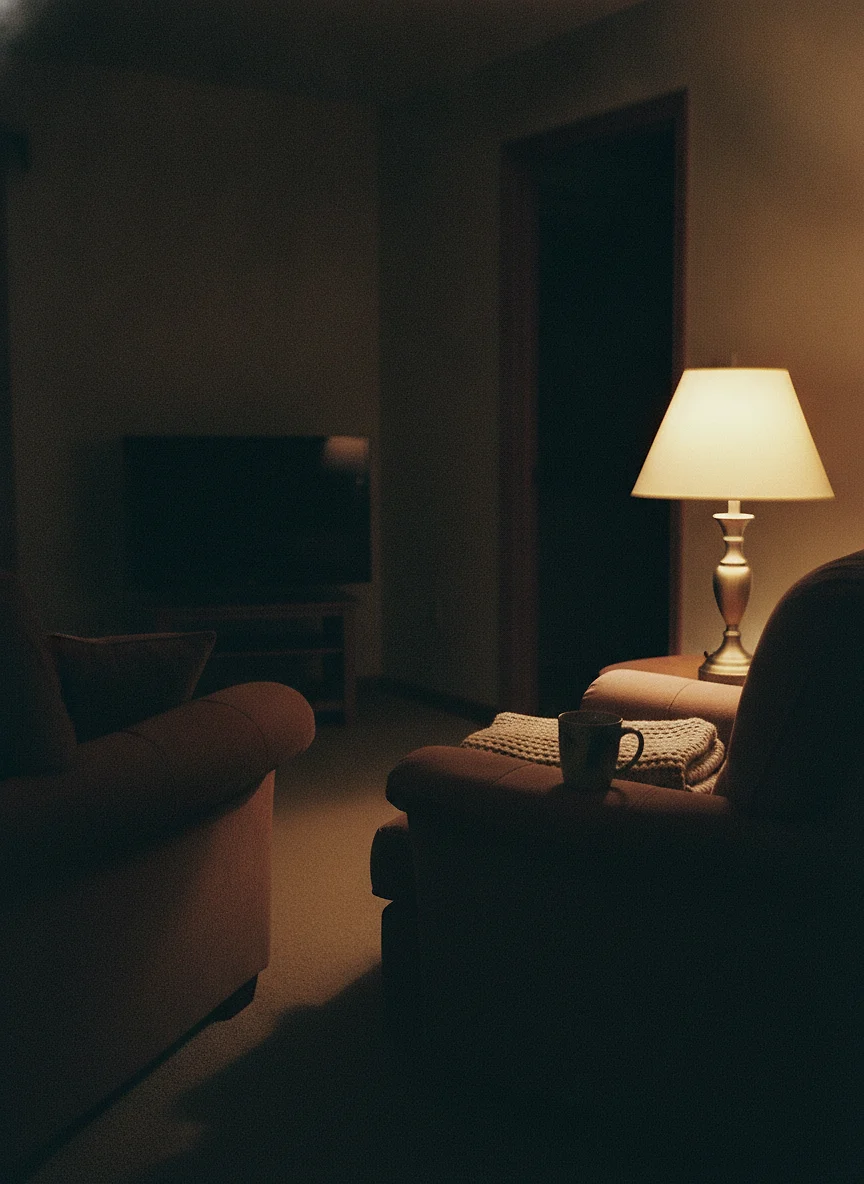
Feeling lonely is a distance, not a headcount. Two marks sit some way apart: the contact a week actually held, and the contact that week wanted. The gap between them is the whole of what the word describes, and it explains the two things about the state that confuse people most — that a full house can hold the worst of it, and that counting anything never settles the question.
Being alone is the other word, and it means something entirely different: a fact about who else is in the room, established from the doorway, true or false regardless of how anyone feels about it. The two get used interchangeably because from outside they look identical — one figure, one flat, one quiet Sunday — and only one of them hurts.
What is loneliness actually made of?
It is made of the gap, and the gap can open from either end. The first mark moves when something goes: a friend leaves, a marriage ends, a job that came with people stops. The second moves after an illness, a birthday, a bad year — nothing visible happens and the week is suddenly not enough. Nothing dramatic has to have occurred for the distance to be there.
Consider two Saturdays with exactly the same contents: one message, one shop, one evening at home. On the first, nothing is missing. On the second, everything is. The week did not change. The expectation did, and the expectation is half of what the word is measuring.
Why does it change through the day?
Because the room stays the same and the cover does not. Cover is the ordinary background of a day — tasks, replies, a queue, traffic, other people visibly being awake. None of it is closeness. All of it sits between a person and the state, and it runs without anybody arranging it.
When it comes off, the gap becomes audible. For example, an evening that follows a crowded, sociable afternoon lands harder than one that follows a quiet day: the drop is steeper, and the drop is what registers. That is an ordinary feature of the state rather than evidence that something is getting worse.
Does it come in more than one kind?
There are different shortfalls, and they do not answer to the same things:
- Emotional loneliness means one particular closeness is missing, and general company does not stand in for it.
- Social loneliness is the absence of a group to belong to — known in several places, expected in none of them.
- Existential loneliness is the sense that nobody can be inside a life with you, and it does not track the size of a circle.
- Situational loneliness has a cause and a date attached: a move, a retirement, a December, a Sunday with nothing in it.
Naming which one is in the room is worth doing because it changes what would help. It does not sort a reader into a type, and nothing on this site does that.
Why does the usual advice land wrong?
Because it names an activity and the state is made of a person. Being told to join something arranges a room, an hour and a subject; whether anybody in that room ends up knowing anything about you is the part that would matter, and it is not on anyone’s schedule. Imagine following every instruction in an article of this kind, correctly, and ending the month with a fuller calendar and the same evening — that outcome is not a failure of effort, and it is the ordinary result of aiming a social answer at a shortfall that was never about numbers.
Where does this site stop?
It describes. It does not diagnose anybody, does not promise an outcome, and does not print a figure it cannot trace to a named source — which, on this subject, means it prints none at all. The reasoning behind that, and the claims that were written and then removed for failing it, are set out on the sources page.
It also stops at the clinical border. Loneliness and depression overlap, and telling them apart is clinical work. If the state has stopped lifting at all, or has turned into hopelessness, or has moved into sleep, eating and the ability to work, that is a conversation for a doctor or a therapist rather than for a website.