About · what this is
A site that describes the state before anyone tries to fix it
No Friends Guide is a reference about adult loneliness: what it is, how it differs from being alone, when it arrives, and what it is like in the particular situations where people meet it — at night, inside a relationship, after a marriage ends, later in life.
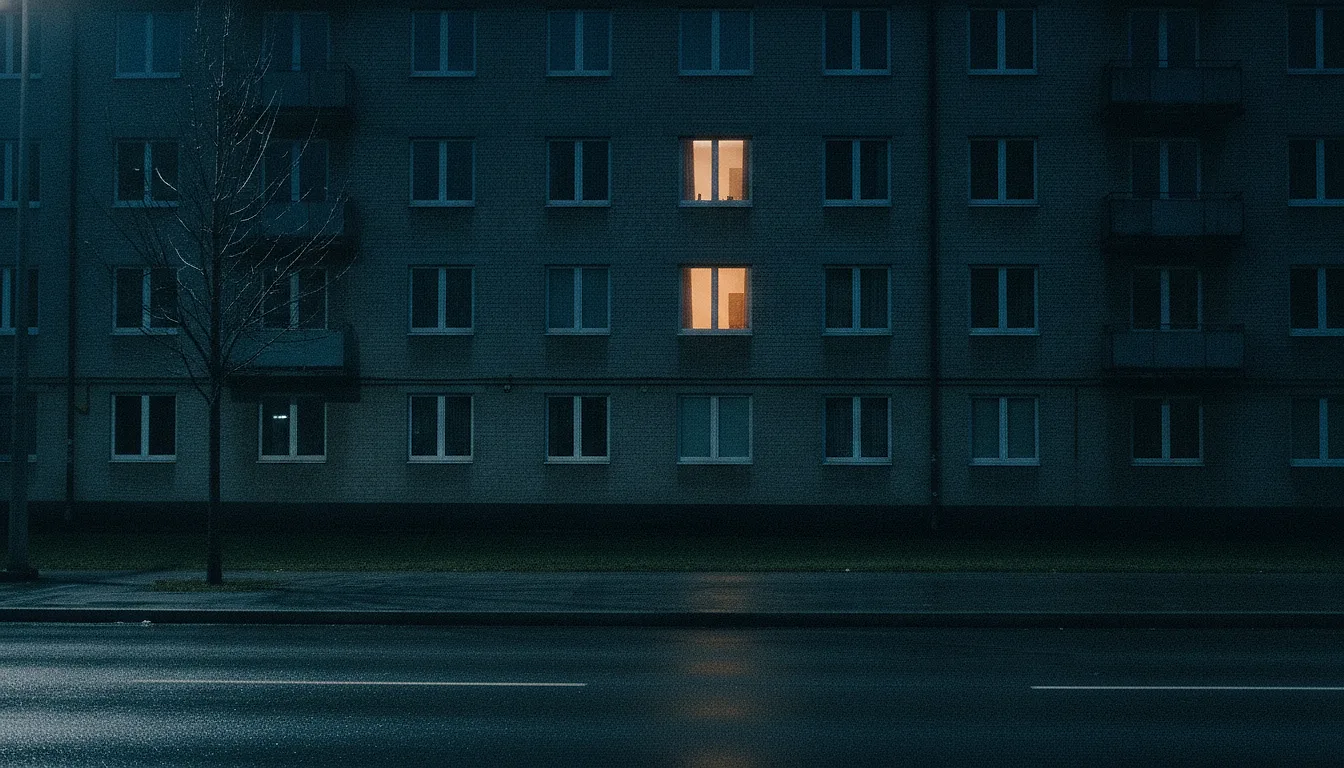
AI-generated imageNothing about the state is visible from the street, which is most of the reason it is so badly described.
Signed Frances Dunmow Editor · the quiet years
One pen name signs this site, and the whole of what it claims is the method below: that the state is described plainly, in the circumstances a reader is actually in, and that each page says where the description stops. There is no licence behind the name and no clinical training — nothing here decides what a reader has.
Why it exists in this shape
The gap it was built for is a specific one.
Search for almost any version of this and two kinds of page come back. One is clinical: a symptom list, a health warning, a figure with no origin attached. The other is encouragement: join something, put yourself out there, be your own best friend. Both skip the same step — saying what the thing actually is, in the hour a person is actually reading.
So that step is the whole site. Each page describes one state in one set of circumstances, says what is going on underneath it, and then says where description runs out. Nothing here is a programme, and nothing here promises the state will lift. What it offers is recognition and a plain account, which is a smaller thing and a more honest one.
Who writes this
A pen name, said plainly, and the narrow thing it is allowed to claim.
I edit this site, and what I brought to it is a stretch of adult life that was quieter than I had expected it to be, and the experience of reading everything I could find about that and recognising almost none of it. The clinical pages described a risk. The encouraging pages described a person who had simply not tried yet. Neither described the room I was actually sitting in, on the evening I was actually sitting in it, which is the thing I wanted and could not get.
So description is the whole method here, and it is deliberately smaller than advice. A page takes the state in a particular set of circumstances — a Tuesday night, a marriage where the talking has thinned out, the first winter after a divorce, a retirement that took the week’s shape with it — and says what is going on underneath it in plain words. Then it says where the description runs out. Nothing here is a programme, nothing here promises the state will lift, and nothing here is written as though I had met the reader.
What I hold the line on is what the pages refuse. No diagnosis: loneliness is a state about contact, low mood is a clinical matter, telling them apart is a job for a doctor and this site does not hold a quiz that pretends otherwise. No figure without a named source and a year, which on this subject means no figures at all for now, because the ones people repeat about isolation and health could not be traced — the claims that were written and then removed are kept on the sources page for that reason. No pity, and no instruction to get out more. And no borrowed voices: no reader letters, no anonymised cases, nobody quoted who cannot be checked.
What the quiet years were like
Ordinary, mostly, and that is the part nothing had prepared me for. Work, a flat, errands, a phone that did not ring in the evening. Nothing had gone wrong in a way anybody could point at, which made the state harder to name rather than easier, and made every page that treated it as a crisis feel like it was describing somebody else.
What changed the writing
Noticing that the thing moves with the hour and the season rather than with the headcount. The same flat after a day of talking is not the same flat after a silent weekend, and nothing in it has been rearranged. Once that was the starting point, the useful unit stopped being advice and started being a description of when, and of what the day had been providing.
What these pages refuse
To decide what a reader has. To print a figure nobody can trace. To speak in the first person about anybody’s health, mine included. To quote a reader who cannot be checked. And to end on getting out more: where the quiet has stopped lifting at all, a website is the wrong object to be reading, and the page says so rather than offering another page.
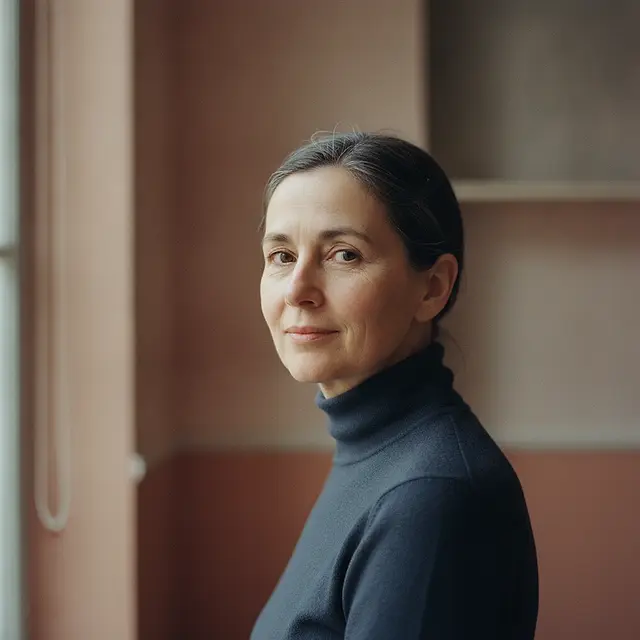
Frances Dunmow is a pen name, and it belongs to this site’s editorial team rather than to a biography you could look up. The name exists so that a page has somebody answerable for it, and not to lend a page weight the text has not earned. There are no credentials behind it: nobody here is a therapist, a counsellor, a coach or a doctor, nobody here holds a licence or clinical training of any kind, and no page is written as though otherwise. The portrait above is not a photograph of a living person — it is an illustration generated with an AI tool, labelled as one wherever it appears, and it is there to give a byline a face rather than to tell you whose. What the name does not claim is a checkable private life: there is no named city, household, employer or diagnosis behind it, and no sentence anywhere on this site speaks in the first person about anybody’s health, the editor’s included. What it does claim is narrow: a long quiet stretch of adult life, and responsibility for the method — description rather than instruction, no figure without a named source, and a stated stop on every page. Drafting is AI-assisted and human-edited, and if a sentence here is wrong the fastest route to fixing it is hello@nofriendsguide.com with the page address and the sentence you are disputing.
The same rule stated as policy, with what it forbids: bylines and pen names.
What this site does claim
Four statements, and everything on the site is one of them applied to a situation.
- That the state has a shape. Loneliness is a distance between the contact a week held and the contact it wanted, not a headcount — which is why the same evening reads differently on different days.
- That being alone and being lonely are different objects. One describes the room and can be established from the doorway; the other describes the person standing in it and cannot.
- That most of the machinery is structural. Arrangements supply contact without anybody being sociable about it. When an arrangement ends, what goes is the repetition, not the willingness — and the loss reads as personal anyway.
- That naming it changes what would help. Which shortfall is in the room decides whether a room with people in it is an answer at all. That is as far as the claim goes; it is not a prediction about a particular reader.
Everything beyond those four is description of a circumstance — a night, a marriage, a retirement, a divorce — and every page says in its own words where the description stops.
What it will not do
Four commitments, each one checkable against any page here.
- No diagnosis. Loneliness is a state, not a condition. This site does not decide whether a reader is lonely, depressed or unwell, and it holds no quiz that pretends to.
- No unsourced figures. No number appears anywhere on this site unless it has been traced to a named primary source with a year. Nothing has, so nothing numeric is published — including quantities stated in words.
- No invented credentials, and no invented people except one declared pen name. The byline is an editorial pseudonym and says so on this page, in the caption under the portrait and in the policy. Behind it there is no qualification, no licence and no clinical training. There are no pseudonymous experts, no borrowed titles, no reader letters, no anonymised case studies and no “one woman told us”: none of that could be checked, and all of it is easy to invent.
- No instructions to cheer up. Nothing here begins with getting out more, and no organisation, app or service is recommended by name.
The rules behind all four, and the record of claims that were written and then removed, are on the editorial policy and sources pages.
Questions people arrive with
Answered here rather than promised behind a link.
- What are the main causes of loneliness?
- A gap opens between the contact a week actually holds and the contact it was expecting to hold, and it opens from either side. The first mark moves when an arrangement ends — a job, a marriage, a school gate, a street of familiar faces. The second moves after an illness, a birthday, a bad year, when what a week is expected to contain quietly changes. Nothing dramatic has to have happened for the distance to be there.
- Why am I feeling so lonely when nothing has changed?
- Because the room stays the same and the expectation does not. The same flat on a Tuesday after a day of talking is not the same flat on a Sunday after a silent weekend, and nothing in it has been rearranged. What varies is how much cover the day was providing, which is why the state can arrive without an event to point at.
- Am I lonely, or just alone?
- Being alone describes the room: nobody else is in it, and it can be established from the doorway. Loneliness describes the person standing in it, and cannot. The two overlap constantly and neither predicts the other, which is why a full house can hold the worst of it and a quiet flat none at all.
- What can I do if I feel like I have no friends or family?
- This site does not answer that with an instruction, because an instruction would be a guess about a particular life. What it can describe is what people report as having mattered: contact that repeats at the same hour in the same place, long enough to stop being an occasion. That is a description of a mechanism, not a promise about an outcome.
- Is loneliness the same as depression?
- They are not the same thing and this site does not decide which one a reader has. Loneliness is a state about contact; depression is a clinical condition, and telling them apart is a job for a doctor rather than for a page on the internet. If the quiet has stopped lifting at all, that is the point at which a website is the wrong object to be reading.
Where to start, by situation
One page from each section. If one of these is the hour you are actually in, start there rather than at the top.
- Alone or lonelyEmotional Loneliness, Social and Existential: The KindsNot all loneliness is one shortfall. Emotional loneliness, social loneliness and existential loneliness arrive differently and are not closed by the same thing.
- When it hitsHow to Cope With Loneliness: Mechanics, Not SlogansHow to cope with loneliness described as mechanics: why 'get out more' fails as an instruction, and what people mean when they say something helped.
- Together but lonelyFeeling Lonely in a Marriage: The Quiet VersionFeeling lonely in a marriage does not arrive as a crisis. It arrives as fewer questions, parallel evenings, and a shared calendar with nothing personal on it.
- Later lifeHow to Make Friends After 60 Without Joining AnythingHow to make friends after 60, from a site selling nothing: why the usual advice comes from places that want you to sign up, and what contact really takes.
- After divorceFriends After Divorce: The Circle That Was Never YoursFriends after divorce can turn out to have belonged to the marriage. Why the circle leaves with the household, and what building contact for one person takes.
How the pages are produced
Stated openly, because a reader is entitled to know.
Drafts are produced with the assistance of AI tools and then edited, cut and checked by a person before publication. The angle of each page, the boundaries it holds and everything it refuses to say are editorial decisions, not model output; automated checks sit on top and refuse a build that carries an unsourced figure or a broken page.
The pictures are generated too, and they say so. Every photograph on this site was made by an image model to a written brief, and every one of them carries a visible label next to its caption saying exactly that. None of them is a photograph of a real person, a real room or a real event, and none is presented as evidence of anything. Where a page makes a structural claim — two states compared, an order of events, a set of kinds — it is drawn as a diagram instead, and no diagram here encodes a quantity: not as a number, not as a word like most, and not as the length of a bar.
Where the numbers come from is a short answer: there are none. A figure may only appear on this site if it has been traced to a named publisher with a year and a URL somebody actually opened, and that list is currently empty — so nothing numeric is published, including quantities stated in words. The claims that were written and then removed for exactly this reason are kept on the sources page, because a rejected claim is as much a part of the record as an accepted one.
Why the byline is a pen name, and what stops it borrowing authority. A page is better for having somebody answerable for it, and worse for having a qualification attached that nobody holds. So the byline is an editorial pen name, declared as one everywhere it appears, and the things that would make it dishonest are the things it is not allowed to say: no licence, no clinical training, no professional title, no diagnosis, no figure without a named source, and nothing in the first person about anybody’s health. What can be checked is still the method rather than the name: what the site claims, what it refuses to claim, and where each page says it stops.
Contact
Corrections are the most useful thing to send.
Email hello@nofriendsguide.com or use the contact page. Corrections are handled the way the corrections policy describes: fixed on the page and noted there.
If something here is wrong, the useful thing is to say which sentence. A correction is applied on the page itself and noted there rather than quietly overwritten, and a page that turns out to be wrong in its premise is withdrawn rather than patched. Errors of description matter as much as errors of fact on a site like this: a paragraph that misnames the state is doing the same damage as a wrong figure would.
One thing this site cannot be: somebody to talk to. If it has stopped lifting at all, or it has turned into hopelessness, that belongs with a doctor, a therapist, or a helpline in your country rather than with a website.