
How to communicate feeling lonely in a relationship is a separate problem from noticing the loneliness, and it is the harder half. The noticing takes an evening. The saying gets postponed, because every draft of the sentence sounds like an accusation against a person who has not obviously done anything wrong.
This page is about the sentence: how it is built, when it is said, and what the likely reactions mean. The state itself — what loneliness inside a relationship is and is not — is described on the hub, feeling lonely in a relationship.
What to do when you’re lonely in a relationship?
Say it, in a form the other person can answer. An answerable sentence is one built from a specific thing that is missing, the moment it is most noticeable, and one concrete change that would register. A description plus a request can be responded to. A verdict about the relationship, or about the partner, mostly produces a defence.
Before that, one private step is worth taking: work out what is actually thin. Loneliness in a relationship is not one thing. Sometimes what is missing is attention — being asked questions, being noticed. Sometimes it is shared time that is not logistics. Sometimes it is a wider circle, and the partner has quietly become the only social contact in the week, which no single person can carry. The kinds are described separately in kinds of loneliness, and they do not respond to the same request.
The reason this step matters is practical. “I feel lonely” without a specification asks the other person to guess, and guessing under pressure produces either reassurance or apology. Neither changes the week.
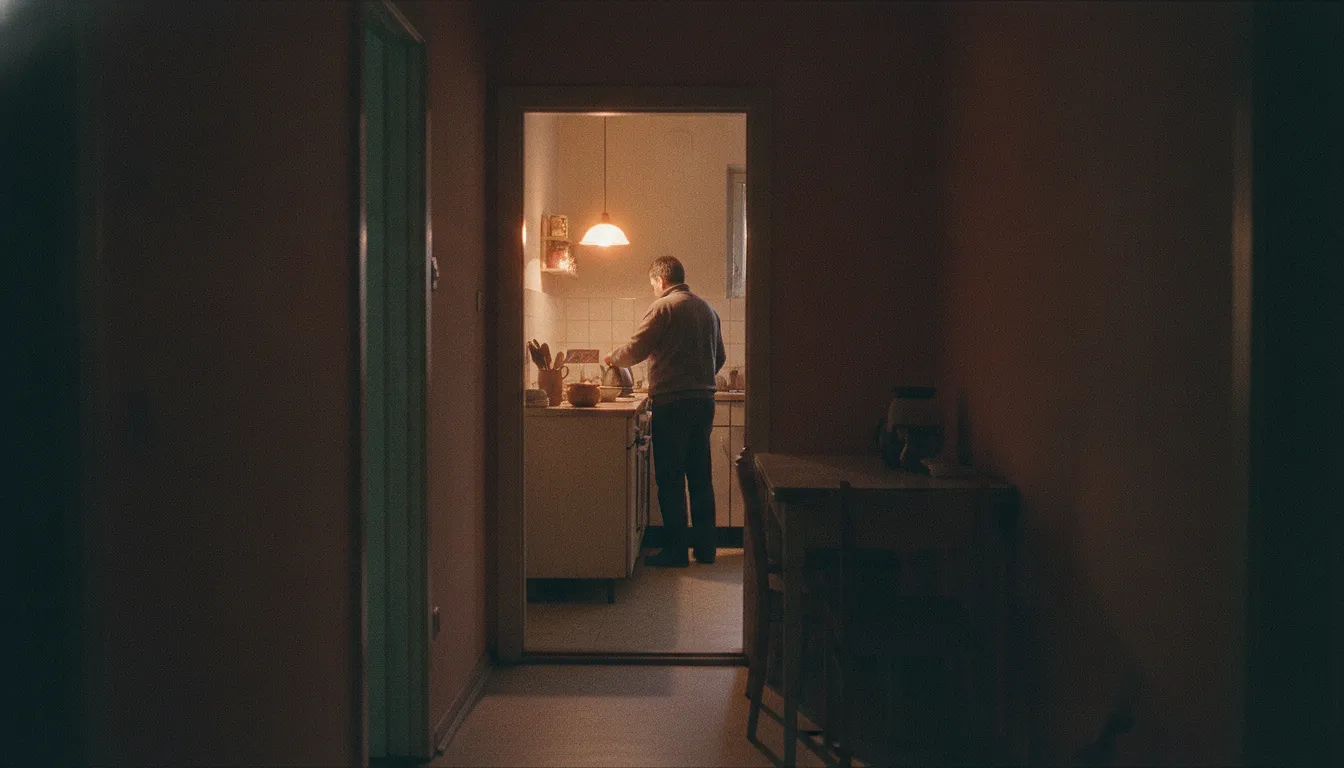
How do you say it without it sounding like blame?
Build the sentence out of a state, a moment and a request. State — what is felt. Moment — when it shows up. Request — the smallest change that would be noticeable. Blame is the extra part that nobody needs: a claim about the other person’s character or intentions.
Work on couples has described this same territory as a question of whether two people can reach each other and be reached, rather than as a question of who is at fault; Hold Me Tight (Johnson, 2008) is written around that framing. Harriet Lerner’s The Dance of Anger (Lerner, 1985) covers the adjacent problem of saying a difficult thing without the sentence turning into a case. Both are named here as places the subject is treated seriously, not as instructions and not as evidence about anybody’s relationship.
The difference is smaller than it looks on paper and enormous in the room. “You never talk to me any more” is a claim about a person’s pattern, and it invites a counter-example. “I miss being asked how my day went” is a claim about a gap, and the only available response is to ask.
| Lands as a verdict | Lands as a description | Why the second one is answerable |
|---|---|---|
| You never talk to me any more. | I miss being asked about my day. | Names a specific missing action instead of a pattern that can be disputed. |
| I might as well be single. | I feel lonely on the evenings we are both home and quiet. | Anchors the feeling to a moment rather than to the whole relationship. |
| You do not care about me. | I do not know what is going on with you lately. | Describes what the speaker lacks, not what the other person allegedly feels. |
| We have grown apart. | Could we keep one evening a week with no screens and no admin? | Turns a conclusion into a request that has a yes or no. |
| I have been unhappy for a long time. | This has been building for a while and I did not know how to raise it. | Says the same thing without implying the other person should have noticed. |
A couple more things about construction. Keep it short: a long opening statement reads as a prepared case, and prepared cases have defendants. And make the request small enough that it can start this week. A request that requires a changed personality cannot be granted, so it functions as a complaint no matter how kindly it is phrased.
When is a bad time to raise it?
The worst moments share one feature: the other person cannot respond properly — for instance mid-argument about something else, in the last minutes before work, in a car, at a family gathering, or late at night when the day’s structure has gone and everything sounds heavier than it will in the morning.
Night deserves a specific warning. What is felt after dark is real, but the scale is not reliable — the same gap that reads as an inconvenience on Tuesday afternoon reads as a verdict on the whole relationship at two in the morning. That mechanism is described in lonely at night. Writing the sentence down at night and saying it in daylight is not avoidance; it is a way of saying the version you actually mean.
There is also a trap in the other direction: waiting for a good moment. A perfect moment requires both people rested, unbothered and unhurried at the same time, which is exactly what a thinned-out week does not produce. At some point an ordinary, mildly awkward moment has to be used, because it is the only kind on offer.
What if the answer is defensive?
Defensiveness is the reaction of somebody who heard an accusation, whatever was actually said. It arrives fast, before the sentence has been fully processed. It is not, on its own, evidence that the person does not care or that the relationship is in trouble.
What helps is not arguing about the reaction. Repeating the request later, in the same plain words, does more than defending the original framing. What does not help is expanding the case — adding examples, adding history, adding all the other things that have been noticed. That converts a request into an indictment, and the defence gets louder.
Outcomes worth separating. A partner who reacts badly and then comes back to it has heard it. A pattern where every version of the conversation ends in defence, and nothing returns, is a different situation, and it is not one a page can assess from the outside. Inside a long marriage this has its own shape, described in feeling lonely in a marriage.
Does distance change the conversation?
Distance changes the mechanics, not the sentence. Feeling lonely in a long distance relationship is harder to raise for a specific reason: there is no shared room, so nothing gets noticed passively. Everything has to be stated, including the fact that something needs stating, and every conversation costs a scheduled call.
The practical differences are worth naming. First, the calls carry more weight than they can hold. Consider a week whose only contact is one scheduled call: that call is expected to do the work of a whole relationship, and it will disappoint. Second, the emptiness has a shape: a particular stretch, a weekend evening or the gap after work, and naming that stretch is more useful than naming the whole arrangement. Third, spontaneity is gone, so asking for scheduled contact is not a downgrade — it is the only form available.
The version of the request that works at distance is small and repeatable: a fixed time that does not have to be negotiated each week, or a low-effort channel that is not a formal call. The version that fails is asking the other person to be more present in general, which at distance means asking them to change their life without saying how.
One more thing, said plainly: a long distance relationship can be functioning and still be lonely. Those are not contradictory, and treating the loneliness as proof that the arrangement is wrong skips a conversation that has not happened yet.
What this page does not do
This is a page about a sentence, not about your relationship.
- No scripts to get a result
- Nothing here is engineered to make a partner respond a particular way. Wording that is designed to produce an outcome is a tactic, and tactics are noticed.
- No signs your partner does not love you
- We do not publish checklists that let a reader diagnose another person from a distance. A defensive reaction is a reaction, not a verdict about someone's feelings.
- No ultimatums
- Framing a request as a condition changes what is being asked. That is a decision about the relationship, and it is not one this page has any business proposing.
- No named method
- There is no branded technique here, no rule with a number in it. The structure — state, moment, request — is a description of what is answerable, not a system.
Where this page stops
This page describes how a conversation about loneliness is built and how it lands. It cannot tell you what is happening in your relationship, whether the response you got was fair, or what to do next. It also does not distinguish loneliness from depression — those are different things, and telling them apart is not something a text can do. If the state is constant, or it is affecting sleep, work or health, that is a reason to talk to a general practitioner or a therapist, or to contact a helpline in your country.