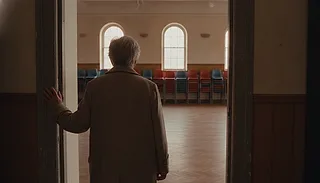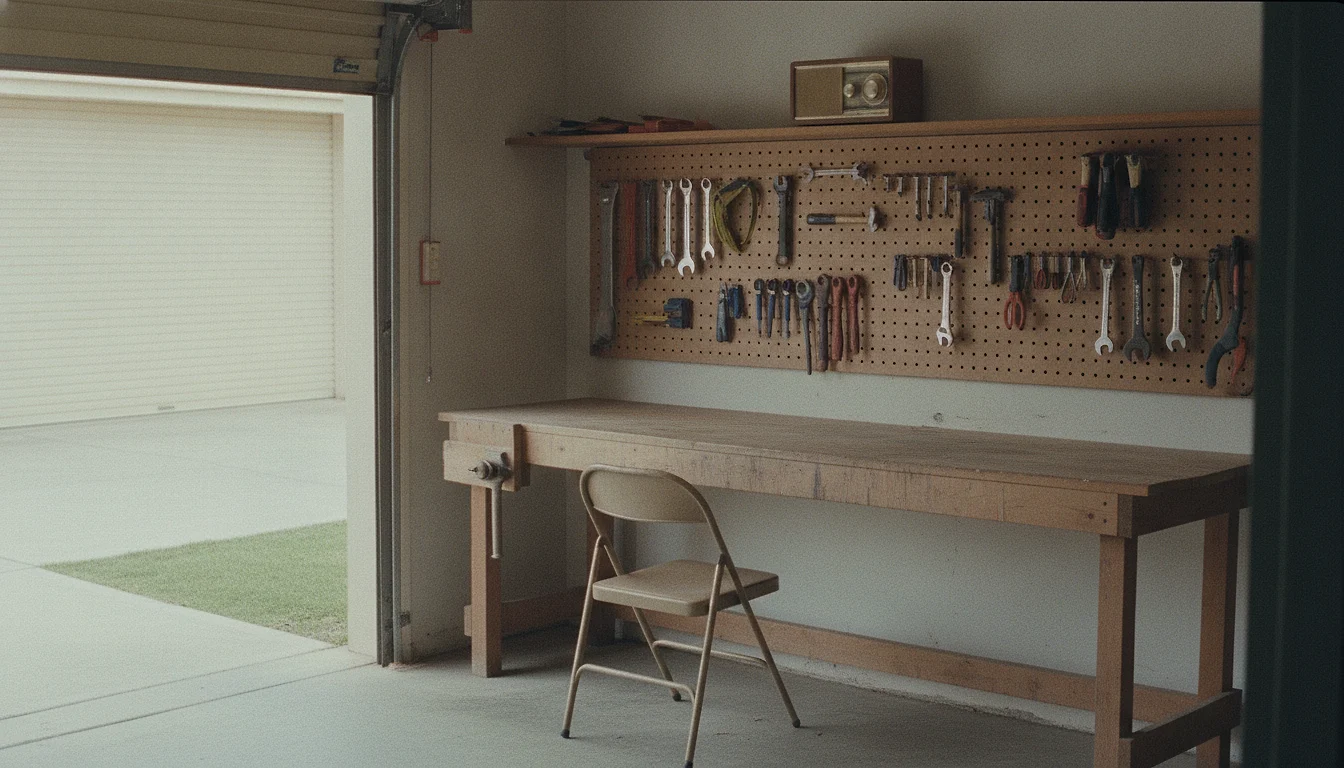
Lonely in retirement describes a state that arrives without the job being missed at all. What is missed is what the job was carrying without anyone noticing: a building full of people who had to talk to them, a reason to be dressed and out by a certain hour, and a week with a shape that arrived ready-made. The work ended, and a quiet piece of infrastructure ended with it.
Why does retirement feel lonely?
Structural company is contact that arrives as a by-product of something else, and retirement removes a daily supply of it. Colleagues were not chosen and did not need to be invited; they were simply there, on a schedule, with shared material to talk about. When the job stops, that company stops on the same day, and nothing automatic takes its place.
This is why the state can appear in a life that looks well filled. Consider somebody with a partner, adult children, a house that needs work and a diary of appointments: the week can still be emptier than it was. What was lost was not affection. It was volume of ordinary, low-effort contact — the small exchanges that never felt like relationships and did the work of making a day feel populated.
The other loss is the reason to leave home. Work was an obligation that put someone in public whether or not they felt like it. Without it, going out becomes a decision, and decisions can be postponed. A week of postponements is not a choice anyone made; it is what happens when nothing external insists.
Why does it start later than expected?
Because the first stretch of retirement runs on novelty, and novelty supplies its own occupation. The postponed repairs, the sleep, the trip that was always for later, the plain relief of no alarm — that period has a list, and a list hides the absence of structure.
The list eventually runs out. What is underneath is an ordinary week with no fixed points in it, and that is the moment the state gets a name. It arrives feeling like a personal failure, as though someone has been handed exactly what they wanted and has not managed to enjoy it.
It is worth being plain about that, because the delay is the part people find hardest to explain to anyone else. The retirement party, the goodbyes and the congratulations all happen at the start. The gap opens after the audience has moved on, which makes it awkward to raise and easy to keep private.
The hub page on the circle thinning after fifty covers the wider version of this — friendships that end without an argument, by subtraction rather than conflict. Retirement is one of the events that does the subtracting, and it does not remove one person at a time.
What can lonely retirees do?
Rebuild fixtures rather than hunt for a solution. The thing work provided was not company in general; it was company that repeated on a schedule, and repetition is the part that can be reconstructed deliberately. One repeating point in the week does more than several one-off outings.
A fixture is anything that repeats without being re-arranged each time, because anything requiring a fresh decision does not survive a bad week — for example a class with an attendance list, a volunteer shift on a rota, a standing call on a set day with someone who will notice if it does not happen, or an errand done at the same hour in the same place where the same faces are present.
Hobbies get recommended for this and are only half an answer. A hobby practised alone at the kitchen table fills time; it does not supply people. The same hobby practised in a room with others, on a fixed day, does both. The distinction is not the activity — it is whether anyone else is scheduled to be there.
Expect the early weeks to feel like effort with no return. The point of attending is being recognised, and recognition requires attendance rather than enthusiasm. Judging the attempt before that stage is what ends it. Making friends after sixty goes further into what that rebuilding takes when the structures are gone for good.
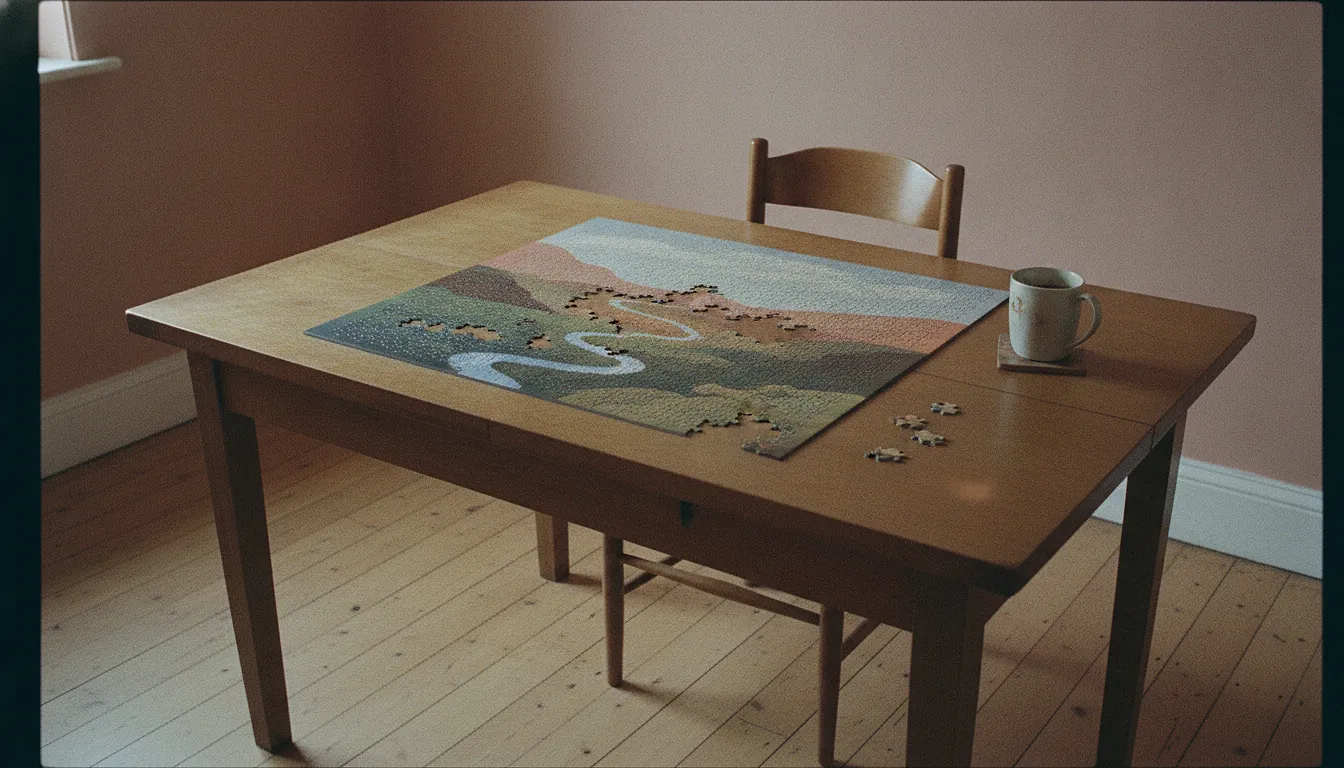
How do you get used to being alone all day?
Slowly, and by building a shape for the day rather than by adjusting an attitude. A shape is a day with fixed points in it: a start, a middle, an end, and somebody expecting you. A working life supplied that frame ready-made. Without it, the day can run formless from morning to night, and formlessness is what makes the hours feel long.
The practical version is unimpressive on the page. Anchors at fixed times. One reason to be outside the house each day, however small. Contact that is scheduled instead of hoped for, because hoping the phone rings puts the day in someone else’s hands. Sound in the house at the hours that feel worst, which are not the middle of the day.
Being alone all day is not the same as loneliness, and the two are easy to confuse in retirement, because for the first time there is enough solitude for the question to matter. Learning to be alone deals with that directly, including what changes when living alone stops being temporary.
The timing matters too. Loneliness does not run at one level through the week; it arrives at particular hours and particular dates, and in retirement the pattern shifts — weekdays stop being protected, and the difference between Tuesday and Sunday disappears. Why loneliness has a schedule explains the mechanism.
Should someone live alone at this age?
That is a household decision, and this page does not have the standing to make it. What can be said is which questions the decision turns on, because families argue about the conclusion without having discussed those.
The first is practical: what does a normal day actually look like, and how much of it involves anyone at all. The second is about noticing: if something changed, who would find out, and how quickly. The third is the one that gets skipped — what the person whose home it is wants, stated by them rather than inferred by adult children who are worried.
There is also a health half to the question, and it belongs with a doctor rather than with an article. This site does not assess anyone’s capacities, and would be inventing an answer if it tried.
Worth separating, though: living alone and loneliness in old age are not the same question. Someone can live alone with a full week and someone can live in a full house and have nobody to talk to. Moving a person closer to family solves the address problem. It does not automatically solve the contact problem, and treating the two as one is how households end up disappointed by a move that looked obvious.
What this page does not do
Retirement and later life attract advice with something attached to it. This page has nothing to attach, which limits what it is willing to say.
- We do not tell anyone where to live
- Housing, care arrangements and moving closer to family are decisions for a household, with a doctor involved where health is part of it. Nothing here is a recommendation about any of them.
- We do not name organisations, clubs or programmes
- We describe what kind of repeating fixture works and leave the choosing where it belongs. Vetting providers for an older reader is not something this site can honestly do.
- We do not publish numbers
- No figures on how common loneliness is in retirement, how long it lasts, or what it does to health. Nothing here has a verified source behind it, so nothing here is presented as one.
- We do not decide what is happening to anyone
- This page describes a state and the circumstances that produce it. It does not assess any reader's mind, health or household.
Where this page stops
This page can describe what retirement removes and what has to be rebuilt on purpose. It cannot tell whether what a particular person is feeling is loneliness, low mood, grief, or something with a medical explanation — loneliness and depression are not the same thing, and this page does not distinguish between them. Anyone for whom this has been heavy for a long stretch, or is getting heavier, is better served by a conversation with a general practitioner or a therapist, or by contacting a helpline in their country.